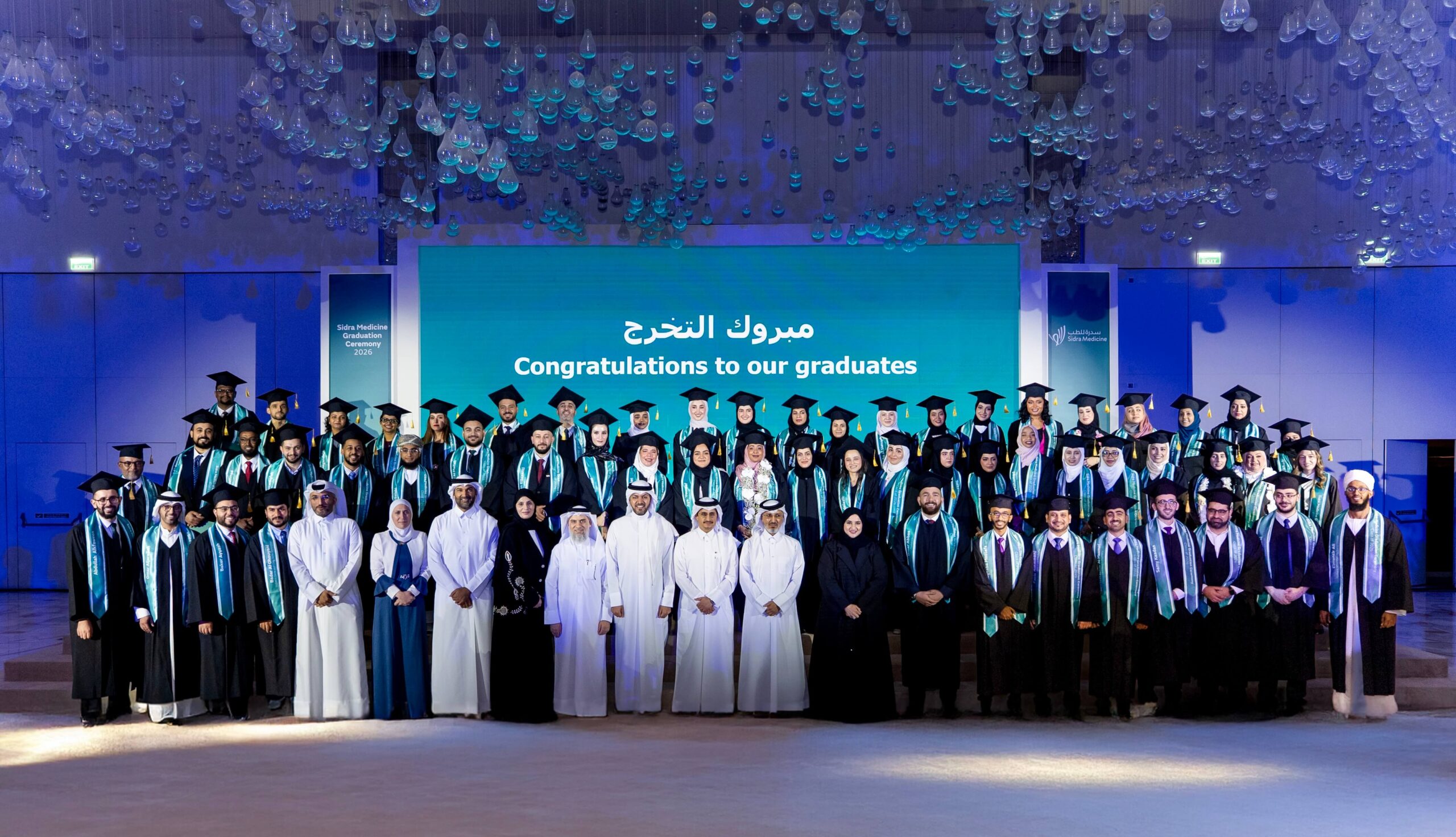
Sidra Medicine Honors Class of 2026 and Expands the Next Generation of Healthcare Leaders
Fourth annual Medical Education Day celebrates 75 graduates while marking continued growth in accredited residency and fellowship training programs
Doha, Qatar – 1 July 2026: Sidra Medicine, a member of Qatar Foundation, celebrated the achievements of the Class of 2026 during a graduation ceremony on 30 June 2026 to mark its fourth Medical Education Day. The event highlights Sidra Medicine’s continued investment in developing highly skilled healthcare professionals to meet Qatar’s evolving healthcare needs while advancing specialized care for women and children.
The Class of 2026 includes 75 graduates who completed residency, fellowship, undergraduate, and sponsored professional training programs including – 24 residents; 42 fellows; four undergraduate medical students; and five Sidra Medicine employees who completed advanced training through the organization’s sponsorship program.
In his opening remarks at the ceremony, Mr. Mohammad Al Mana, Acting Chief Executive Officer and Member of the Board of Governors at Sidra Medicine, said: “Today marks the beginning of a new chapter for our graduates and another milestone in Sidra Medicine’s commitment to developing future healthcare leaders. We are proud to celebrate their achievements and confident they will make a meaningful impact wherever their careers take them, carrying forward the values of excellence, compassion, and humanity that define Sidra Medicine.”
The ceremony was attended by diplomats, including H.E. Ahmad Al Shuraim, Ambassador of the State of Kuwait, and distinguished leaders from Qatar’s healthcare and academic sectors, including Ms Maha Zayed Al Ruwaili Assistant Undersecretary for Educational Affairs and Dr. Batool Hashem Al Sayed, Director of Higher Education Institution Affairs at the Ministry of Education and Higher Education, and Dr. Thurayya Arayssi, Vice Dean for Academic and Curricular Affairs at Weill Cornell Medicine–Qatar.
Prof. Ibrahim Janahi, Chief Medical Officer of Sidra Medicine, said: “Healthcare is entering one of the most transformative periods in its history. Advances in artificial intelligence, precision medicine, and biomedical research are reshaping how we diagnose and treat disease. While these innovations will continue to transform healthcare, compassion, empathy, and human connection will remain at the heart of medicine. We are proud to see our graduates from Sidra Medicine carry with them the clinical expertise, curiosity, and values needed to improve the lives of women and children across Qatar and the region.”
Graduates will continue careers across 25 pediatric and women’s health specialties, including child and adolescent psychiatry, neonatology, nephrology, cardiology, endocrinology, emergency medicine, neurosurgery, urology, and orthopedic surgery.
More than 24 percent of this year’s graduates are Qatari nationals, underscoring Sidra Medicine’s commitment to developing Qatar’s future healthcare workforce. All graduating residents have successfully matched into fellowship programs at Sidra Medicine and will continue their specialty training within the organization. In addition, two Qatari physicians sponsored by Sidra Medicine have completed advanced women’s health training in Canada and at Hamad Medical Corporation and will join Sidra Medicine as attending physicians.
Education Expansion
Sidra Medicine continues to expand its graduate medical education programs to meet the growing demand for highly specialized healthcare professionals. During the past year, Sidra Medicine’s Pediatric Orthopedic Surgery Residency Program received Accreditation Council for Graduate Medical Education International (ACGME-I) accreditation, bringing the organization’s total number of accredited residency programs to 24.
Sidra Medicine also launched four new fellowship programs in Women’s Health, Pediatric Intestinal Rehabilitation, Pediatric Neuromuscular Disorders, and Advanced Hypospadias Surgery, increasing its fellowship portfolio to 45 programs.
These milestones reinforce Sidra Medicine’s position as one of the region’s leading academic medical centers, combining education, research, and clinical excellence to prepare future healthcare leaders.
Awards
The celebration concluded with the Medical Education Appreciation Ceremony, recognizing outstanding achievements in graduate medical education.
Medical Education Awards 2026
- Best Resident Award: Dr. Mohamedalmogtaba Mostafa
- Best Fellow Award: Dr. Lujain Loay – Pediatric Hospital Medicine
- Best Faculty Member Award: Dr. Magda Yousef
- Best Learning Environment Award: Division of Pediatric Nephrology
- Best Program Coordinator Award: Mary Jane Lara
- UME Excellence in Clinical Teaching Award: Dr. Salman Islam
- Excellence in Learner Timely Feedback Award: Dr. Magda Yousef
- Mentorship Excellence Award: Dr. Ahmad Kaddourah
- Excellence in Teaching Award (Sidra Medicine): Dr. Ikram Ul Haque
- Excellence in Teaching Award (HMC): Dr. Bassem Mostafa
- DIO Award: Dr. Elwaseila Hamdoun
For more information about Sidra Medicine’s Medical Education programmes, please visit www.sidra.org/medical-education.



Our Insurance Partners
Our Insurance Partners